|
CATHETER
Play
Catheters
are
flexible tubes used in medical treatment
and
surgery for feeding into various body structures to allow access
from
the outside. The main use of a catheter in BDSM, is the catheters
designed
for the bladder 'control' scenes: the best type to use for this purpose
is the foley catheter, which has a balloon that can be inflated with
sterile
water to hold it in place once inserted.
Catheter play
involves the urethra, the
tube that runs between the bladder and the outside of the body,
emerging
in men at the end of the penis and in women just inside the vagina area
(under the clitoral hood).
Except
for the very end nearest the surface, this tube is sterile, and
anything
inserted into it deeper than a few millimeters should be sterile too
otherwise
an infection is easily caused. Serious damage can be done by inserting
inappropriate objects or using excessive force or bad technique. The
best
known forms of urethral play involve catheters and sounds, items of
medical
equipment specifically designed for use in the urethra.
Regretfully, so
far
this briefing only
covers male catheterization. Women's urethras are
shorter, and can be difficult to insert or maneuver the catheter. Women
are
also even more prone to infection. We
only recommend properly trained and practiced individuals attempt
female catheterization.
A word of
caution:
This kind of play is
not something you should engage in with someone who is inexperienced or
who does not understand all the necessary precautions. Carelessness can
result in infection, injury, or other traumatic problems. You should be
introduced to this kind of play in the right setting by an experienced,
careful person who cares enough about you to exercise all the cautions
set forth herein. Even an experienced person should get an extra
catheter
and practice all of the steps below before trying to insert a cath --
especially
the steps involving inflation and deflation of the balloon.
One aspect of
catheter play is the
physical
sensation and psychological effect of having an object inserted into
the
urethra, which is strangely sensitive. Catheter games can also involve
medical imagery and the peculiar penetrative vulnerability of having an
object inserted deep inside the body, into what is in actual fact an
internal
organ.
The biggest
thrill
for most people,
though,
is most likely control. Catheterized people have no control over their
urinary function: if the
catheter is left
open, the bladder will drain completely and continue to drain as more
urine is produced. If the tube
is clamped off,
they cannot urinate, even if they wish and need to.
The
Catheter 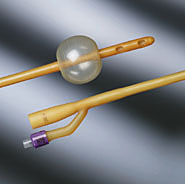
There are
several
kinds of catheters,
usually
named after their inventor or on the basis of the kind of tip they
employ. The best
catheters are made of
latex rubber coated with teflon, which makes them very smooth when
lubricated. Some
catheters are made of
plastic which becomes very flexible at body temperature; these are
usually little more than
simple tubes
with a slight 'funnel' at one end. By far the most common type for use
in sexplay, and the type to
be preferred,
is the Foley catheter. This has a balloon device that allows it to be
left securely in place for a
significant length
of time; others will slip out.
The Foley
catheter has a rounded tip, one or two 'eyes' (holes through which
the urine enters the main tube), and
a tiny balloon that
can be inflated
once the catheter is in place. Before insertion the balloon is evident
as just a slightly raised
area near the tip
of the catheter.
The 'outside'
end has
two branches. One
is the main tube, connected directly to the eyes, through which urine
flows. The other, which
has a small valve
on the end, runs inside the main tube and is connected to the inflatable
balloon at the tip.
The valve is
important: there are three
types. One is operated by a hypodermic syringe without a needle. The
other type is
essentially a plug of soft
rubber and requires a hypodermic syringe and a large gauge needle (a
gauge 18 would be fine).
A third type
has a bulb already filled with sterile water for inflating the balloon,
and a clamp to enable the
water to flow.
Only
factory-sterilized catheters
should
be used. They are packed in sterile, sealed paper/plastic peel-open
sleeves. Avoid the
temptation to try to
sterilize a used catheter. Sterility is essential!
Most
catheters
are the same length -- about 430mm (16"). But there are two size
variables:
the diameter of the catheter and
the size of
the balloon.
In buying a Foley catheter, you must describe it by both of these
dimensions. Like some
other medical items,
catheters are sized in the French system. One French unit (Fr) is
0.33mm(0.012").
Thus, an instrument which is 20Fr is 20 x 0.3 = 6mm (0.24") in diameter.

How big of a
catheter do
you want? Most
adult males can easily handle a 14Fr, and 16Fr or 18Fr is very common.
If the opening of your
penis is fairly
small, opt for a 14Fr; if it's average, try a 16Fr; if it's a bit
larger,
try an 18Fr. The urethra can also
be
enlarged over
time by the use of sounds. The balloon of a
Foley
cath is sized in ml (cc). Typical sizes are 5, 10, and 30ml. I
recommend
30ml for reasons which will be made clear below. So if you are an
average
sort of guy, you might want a 16Fr/30ml Foley catheter, sterile.
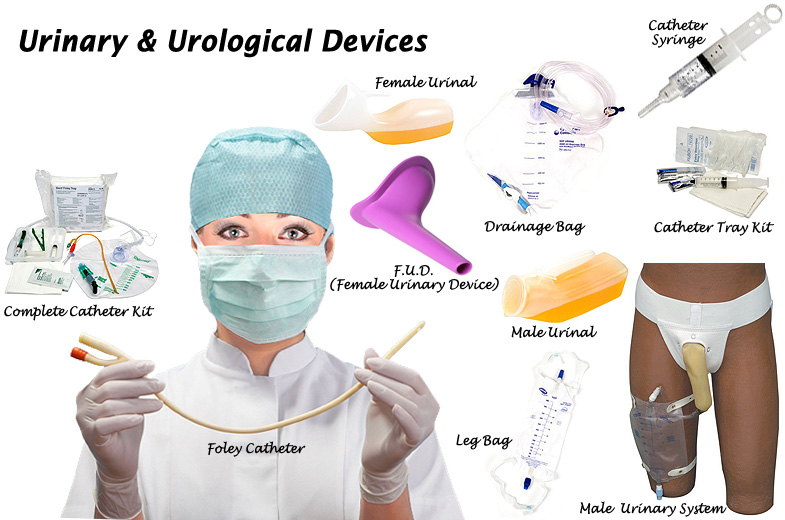
As well as the
catheter, you will need: (see
our Catheter Kits which contain
all
of this and more...)
-A sterile
hypodermic
syringe (luer tip is good), of about 10-12ml capacity.
-A sterile
hypodermic
needle, around 18 gauge, 25 or 40mm (1" or 1.5") long, if required for
valve.
-If you intend
to take total control of the bladder, a sterile catheter
syringe. This is essentially a very large hypodermic
syringe
(60ml or more) with a large plastic tip which fits into the outflow
tube
of the catheter. This must be
sterile, sealed in a factory-sterilized package. Otherwise you will
need
a spigot or clamp to prevent the
bladder
emptying unwantedly.
-Latex
gloves
-Sterile
lubricant. Some brands are stabilized with a preservative which can
burn slightly when it is in
contact with
sensitive tissues. Surgi-Lube
seems
to be the best since they are minimally irritating.
Do not use
lubricant which contains nonoxynol-9: it is quite irritating to the
urethral tissues.
-A sterile --or
at least clean -- towel
-Washcloth, soap,
and water.
Catheterization
Procedure
-
Inserting
the Catheter
Before
beginning,
fill the hypodermic
syringe
with sterile water (our catheter kit
has all of this already to go!). Wash
your hands
carefully with soap and
water.
Place the bottom
on
his back in a
comfortable
position, legs slightly spread. Wash his penis with soap and warm water, carefully,
and rinse with
plain water, to reduce the surface bacterial count. Anti-bacterial soap
may be efficacious. Ideally
this would be
a sterile procedure, but even in hospitals it cannot be done with full
sterility. Some people advocate
washing the penis
with Betadine , but I do not believe this helps a lot, and it is both a
mess and highly
staining. A wipe with
a Betadine swab is slightly less so.
Put on the latex
gloves. Be careful
what
you touch after this point. Unfold the sterile towel and put it on his
belly. Put the unopened
catheter on the towel.
Open only the
valve-end of the catheter
package. Attach the sterile catheter syringe to the large opening.
Determine whether the
valve requires the
needle or not. If so, fit the needle to the 12ml syringe now but do not
attach it to the
catheter.
Put a small blob
of
lubricant right on
the tip of the penis, at the urethral opening. Carefully remove the
catheter from its package,
setting the syringe
end on the towel. Generously lubricate only the first 75mm (3") of the
catheter and insert it
gently into the
penis. Continue to insert slowly, twisting the cath slightly to be sure
its passage is fully
lubricated. As you insert
more of the cath, lubricate it in 75mm sections. (It is too slippery to
handle if you lubricate
it all at once.)
Depending on the
length of the person's
penis, you will probably be able to insert about 25cm (10") of the cath.
At some point you will
feel slight
resistance,
and the bottom will report feeling a 'pinch; in a place he cannot
describe. You have
reached the bladder
sphincter muscle, which keeps the bladder closed. Ask the bottom to
relax and try to piss a
bit -- the
catheter
should slip into the bladder. When you have inserted about 35-38cm
(13"-14") of the
catheter, stop. If the
bottom has a short penis, stop sooner.
We must now
check to
be sure the
catheter
is properly placed in the bladder. We do this by gently trying to
withdraw some urine into
the catheter
syringe. If you do have urine flow, you are in the bladder. If not, you
need to insert the catheter
farther. Do not
go on to the next step until there is evidence of urine in the catheter
syringe. The bottom should feel
no real pain.
If you do not
use a
catheter syringe,
the
point where the bladder is reached is obvious, since there is a gush of
urine from the catheter.
You should clamp
the end of the cath or block it with a spigot, then push a further 75cm
(3") or so into the
bladder to be on the
safe side.
When the cath is
in
the bladder, attach
the hypodermic syringe to the valve and slowly inflate the balloon with
water by pressing the
plunger of the
syringe.
Never over inflate the balloon! On a 30ml balloon, really only needs
to be inflated to
12-15ml, or about half
its stated capacity. If the balloon breaks, you could have a problem.
If the bottom
feels
any pain at this
point,
stop. You probably do not have the balloon in the bladder.
After the
balloon is
inflated, note how
much water you have put in, then remove the hypodermic
syringe from the valve;
the balloon will
stay inflated. Keep the catheter syringe in place.
Alternatively if
you
are using a
ready-filled
catheter release the clamp that holds the water out of the balloon.
If all has gone
well,
the balloon is in
the bladder. Slowly pull out on the catheter; you will feel resistance,
at which point you should stop.
The balloon is
now at the 'neck' of the bladder, and everything is under control.
-
While the Catheter is in
You can now
withdraw
some urine with
the
catheter syringe, or you can return the urine to his bladder by the
same mechanism. If you
remove the catheter
syringe from the cath, your bottom will piss until he is empty. Even
after he is empty, he
will have the
sensation
that he is pissing. Do not disconnect the catheter syringe and then
try to reconnect it and
refill him. You
will get air in the bladder, and you don't want to do that. You may
clamp
off the catheter to prevent
leakage or to
prevent him from pissing when he thinks he needs to. (He will probably
have some confused
feelings.) I did one
scene in which the bottom was blindfolded, and reacted very eagerly
when some of his own
piss was dripped
on his lips from the syringe.
Some people also
like
to play elaborate
piss recycling games by connecting a catheter to a leg-bag
(as
supplied for incontinent
patients) and
the outlet of the bag into a drinking tube or gag or another concept is
using a bed-side or table-side large
drainage bag for extended time sessions.
Be gentle with
the
penis once the
catheter
is in place, and avoid disturbing it too much. Resist any urge to
masturbate: this will
irritate the urethra
and if done vigorously it could injure the bladder or sphincter muscles
or nerves!
A Foley cath may
be
kept in place for
awhile,
but certainly not with the tube clamped off; you don't want to keep
it shut off for so long
that urine backs
up toward the kidneys. If he really needs to piss, unclamp the tube and
let him. Although caths are
often kept in
place for days in a hospital, I recommend that you do not leave it in
place for longer than one to
two hours while
you play.
-Removing the Catheter
First, deflate
the
balloon. Re-attach
the
hypodermic syringe as you did before, and the pressure from the
balloon may cause the
syringe to refill.
Exert a bit of suction with the syringe: be sure you have taken out as
much water as you put
in; the balloon
must be deflated.
Now slowly
withdraw
the catheter. The
bottom
may feel slight discomfort, as the balloon has been slightly
deformed and it may not
be as perfectly
smooth as it was before insertion. Wash off any excess lubricant which
may emerge from the tip
of the penis.
The first two or
three times the bottom
urinates, he may feel a slight burning sensation. This is normal and is
caused by irritation of
the urethra; it
should go away within 12-24 hours. Urge the bottom to drink a lot of
fluids so that he urinates a
lot: this will give
him the chance to flush out any germs before they multiply.
Health
and Safety
Problems
-Incorrect Insertion
It is very
important
to put the
catheter
in carefully since there is always a chance it can go astray in
the urethra and cause real damage!
Go slowly and with
great care. Though the bottom will feel strange and uncomfortable,
particularly if this is
a new experience,
there should be no real pain. If there is, something is going wrong. It
is also a good idea to make
sure the bottom
hasn't pissed for half an hour or so before the insertion, so there will
be some urine in the
bladder to help
confirm
the cath is in place. When in doubt, withdraw the catheter (as carefully as you put it
in) and try again
another day with a fresh cath. Do not attempt to re-use a cath once
withdrawn.
-Valve or Balloon Failure
There is a small
possibility that the
valve
will malfunction and you won't be able to deflate the balloon. If this
happens, don't panic.
Simply cut off the
valve with scissors; the water will gush out. Now try to attach the
syringe to suck out more. The
rubber-plug valves
(used with a needle) are less prone to failure than the force-fit valves
which do not use a
needle.
There is a
smaller
possibility that the
balloon will break inside the bottom. By under inflating it, you reduce
this risk even further. And
by using sterile
water you ensure that anything that might be introduced into the bladder
this way is harmless.
Withdraw the
catheter
very carefully and inspect the balloon to be sure there are no missing pieces left
inside (highly
unlikely).
Then let the bottom piss to rid himself of the water from the balloon.
-Infection
Bacterial
infection
in the urethra or
bladder
is the most common danger of catheterization. The risk of this can
never be eliminated
totally -- even in
hospitals, where caths are inserted in the best of conditions,
infections
still occasionally occur. The
risk can be
minimized,
however, by following the procedures carefully, using only sterile
catheters, and
encouraging copious
urinating
after removal.
If infection does
occur, it can
be unpleasant, but is rarely a problem if medical help is sought and
normally
responds well to
antibiotics. The
symptoms,
normally developing within a couple of days of catheterization, include discomfort in
the bladder, a
constant
urge to urinate, cloudy urine and maybe feverishness or a feeling of
being under the weather.
Visit a doctor
or a genito-urinary/STD clinic, swallow your embarrassment and tell
them
what the most likely cause is. Don't put off going: infections can
cause
serious problems if allowed to take hold. Make sure you're fully
recovered
before indulging in catheter play again!
Basic
BDSM credo:
Safe,
Sane and Consensual!
 Return to Catheter
Products Page Return to Catheter
Products Page
Return to Medical Fetish
Library
Return to Products Page
Return to Site Index
Page
|






















 ShareThis